South Dakota has no license for IV hydration businesses, and a state pharmacy official called that "one of those gray areas" in 2023. What it does have is a nursing board document written for exactly this work, a corporate practice statute with an unusual three-year limit on physician contracts, and the Sturgis Motorcycle Rally, where IV clinics have already appeared as vendor booths. Add Sioux Falls, the state's year-round base, and a Black Hills summer built around national parks, and the market is real but uneven. Each rule below links to its source. This is background reading; a South Dakota health care lawyer should check your setup before you open. South Dakota is also on our IV therapy rules map, for a side-by-side look at other states.
The nursing board's elective IV guidelines
The South Dakota Board of Nursing's Position Statement on Elective IV Infusion/Hydration and Medication Therapy Guidelines carries approval dates of November 2022, November 2023 and November 2026. The board affirms that giving elective IV therapy and hydration, with additives such as vitamins, minerals, electrolytes or medications, "as part of a prescribed plan of care for medical or wellness reasons" is within the scope of a licensed RN or LPN (SDCL 36-9-3, 36-9-4 and ARSD 20:48:04:01). The board says its position statements do not have the force of law, but they are its stated view of safe practice. What it requires in plain terms:
- A provider's order behind every drip. An authorized medical provider writes the order the RN or LPN follows "as part of a prescribed plan of care," and a nurse who carries out a standing order or protocol stays accountable for working within the nurse's license.
- No diagnosing or prescribing by nurses. The Nurse Practice Act "does not authorize an RN or LPN to engage in acts that require independent medical judgment, medical diagnosis, or the ordering or prescribing of medications or therapeutic regimens."
- No gray-market drugs. Foreign-sourced drugs the South Dakota Board of Pharmacy has not approved, and drugs the FDA marks Research Use Only, "should NOT be obtained, procured, or administered."
- A setting with written systems. The business must keep written policies; records of the assessment and history, education, consent, the procedure, the client's response, and the lot numbers and expiration dates of what was given; a way to check staff competence; secure drug storage kept to the manufacturer's recommendations; an emergency plan that says when to call the provider; and infection control.
- Nurse owners register. Licensed nurses who own a business providing nursing services must register it with the board as a nursing corporation.
Protocols start with a provider exam
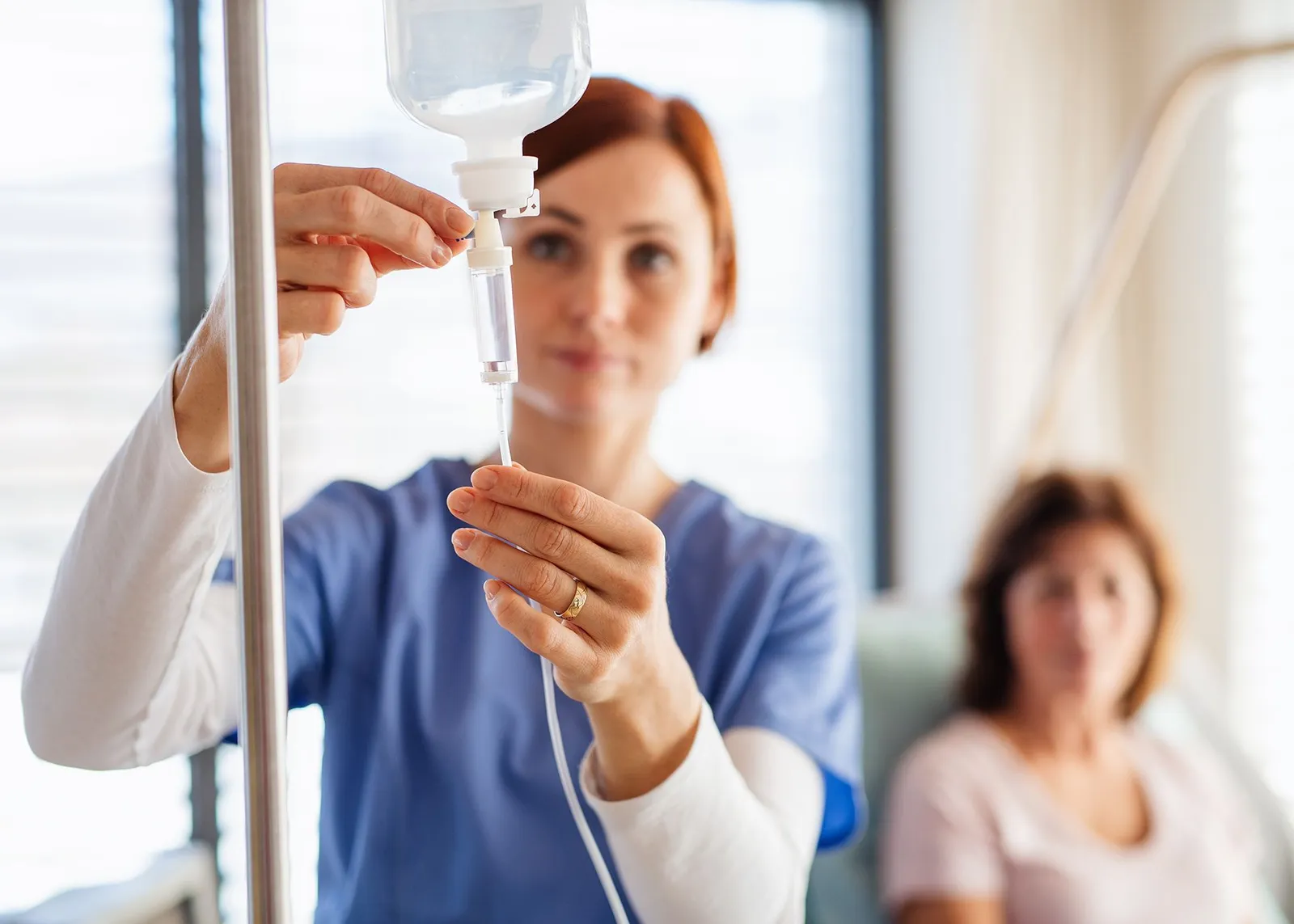
Protocols and standing orders are written by an authorized medical provider, such as a physician, nurse practitioner or physician assistant, and the 2026 guidelines are clear that they do not replace that provider: "Before a provider issues the protocol or standing order for a client, the provider must have established a provider-client relationship with the client." That relationship includes the provider's review of the client's medical history and a medical assessment "for each episode of care," which the board defines as "a series of unchanging treatments or procedures for a specific IV therapy or medication therapy service during an established period of time as outlined in a medical order or protocol." The assessment "may be performed in-person or via telehealth," with telehealth following SDCL chapter 34-52. And protocols "are not intended to allow a nurse to provide menu-driven care." The board lists what a protocol or standing order must do at a minimum:
- Be in writing, dated and signed by the medical provider.
- Name the training, education and competency evaluation the RN or LPN must complete before doing the procedure.
- List the health history and assessment data to collect, the contraindications, and when to consult the provider.
- Set out the steps for doing the procedure safely.
- Be reviewed every year and updated to accepted medical practice standards.
In practice: a physician, NP or PA reviews each new client's history and assesses them, in person or by live video, before the first bag and again for each new episode of care, then issues the order or protocol your nurses follow. That is a nursing board describing nursing scope, not the medical board approving any particular prescriber's practice; we found no South Dakota Board of Medical and Osteopathic Examiners statement on IV hydration. Write the exam step into the protocol with your medical director and a South Dakota lawyer.
Who can own a South Dakota IV company
South Dakota put its corporate practice rule into a statute in 1993. SDCL 36-4-8.1 says it is the state's public policy that "a corporation may not practice medicine or osteopathy," except through a medical corporation under chapter 47-11. Then it does something few states do: it spells out when a corporation may still employ a physician. The agreement must not:
- supplant, diminish or regulate the physician's independent judgment about diagnosis and treatment;
- let the corporation profit from the practice of medicine itself, for example by charging more for the physician's services than the physician would charge alone, although the corporation may charge reasonable facility, equipment and administrative fees; or
- remain in effect for more than three years, after which both parties may renew it each year.
For a founder without a medical license, that is a workable map. A company can employ a physician under that statute if the agreement protects clinical judgment, keeps the company's revenue tied to its real facility, equipment and administrative services, and runs no longer than three years before annual renewal. Other paths:
- Medical corporations are formed by physicians licensed under the Medical Practice Act (SDCL 47-11-1), and only licensees may give treatment through them.
- Nursing corporations and PLLCs can be formed by RNs, LPNs, nurse practitioners and other licensed nurses (SDCL 47-11E-1), and must register with the Board of Nursing.
Have South Dakota counsel draft the employment or services agreement with the three-year term in mind, and calendar the renewal. Our post on whether a nurse can own an IV therapy business covers the questions to bring.
Who hangs the bag in South Dakota
Registered nurses
Under the board's guidelines, an RN may perform nursing interventions, including IV therapy and medication administration, as ordered by an authorized medical provider, and may supervise LPNs. The RN may not diagnose, or order or prescribe the medications or the treatment plan.
LPNs, under rules rewritten in 2023
South Dakota amended its LPN rules effective December 10, 2023. Under ARSD 20:48:04:06, an LPN who has completed training with supervised clinical practice and shown competence may, for clients twelve and older and on a prescriber's order:
- insert peripheral IVs with a needle or catheter no longer than three inches;
- give IV fluids, with or without added medication, that a pharmacist, RN, physician, dentist or manufacturer has prepared and labeled (the nursing guidelines add nurse practitioners and PAs to that list);
- calculate and adjust rates, and discontinue the infusion and remove the catheter.
Two limits matter for a mobile company. The rule does not list mixing an additive into the bag among an LPN's tasks, apart from activating a manufacturer's ready-made bag-and-vial system; someone on that list prepares and labels the bag first. And IV push medications by an LPN require direct supervision in a health care facility licensed under SDCL chapter 34-12, so not in a living room. Supervision follows ARSD 20:48:04:01.03: with a stable client the LPN may work under minimal supervision, with the RN or APRN on the premises or readily available by electronic communication.
Paramedics and unlicensed staff
South Dakota's paramedic statute, SDCL 36-4B-17, describes ambulance-based work: responding to requests for care, using the equipment typically found in an ambulance, giving medications the board approves, and transporting patients. We found no South Dakota ruling that lets paramedics or EMTs run elective hydration visits outside an EMS service, and the nursing board's guidelines speak only to RNs and LPNs. Staff the chair with nurses.
Prescribers and telehealth
South Dakota nurse practitioners reach independent practice after 1,040 practice hours, which a new NP completes under a written collaborative agreement with a physician or an experienced NP (SDCL 36-9A-4). After that, SDCL 36-9A-12 lets an NP diagnose, prescribe, procure and administer legend drugs. The national NP association's South Dakota fact sheet (updated October 2025) labels the state full practice. If your NP is still inside those first hours, name the collaborating clinician in writing.
Telehealth has its own chapter. Anyone treating a South Dakota patient by telehealth must be fully licensed in the state (SDCL 34-52-2) and must establish a proper provider-patient relationship: verify the patient's location and identity, disclose credentials, get consent, establish a diagnosis through history and examination, and provide follow-up and a visit summary (SDCL 34-52-3). SDCL 34-52-5 adds that a professional using telehealth "shall provide an appropriate face-to-face examination using real-time audio and visual technology prior to diagnosis and treatment" whenever an in-person encounter would otherwise be required. Plan on a live video visit, not a form. OMG can put you in touch with an independent partner medical team for this step; the good faith exams and medical direction page explains how the hand-off works.

Where the bags come from
The nursing guidelines set the supply chain for any setting that uses them:
- Licensed sources only. Drugs and substances must come from a South Dakota licensed wholesale drug distributor or a 503B outsourcing facility, under SDCL 36-11A, and never from foreign sources the state pharmacy board has not approved or as Research Use Only products.
- Preparation to standard. The setting must follow state and federal requirements and standards for preparing and giving IV solutions, with or without additives.
- Nurses do not prescribe. Neither RNs nor LPNs may order or prescribe medications, and an LPN may not procure them. Keep the wholesale account with the prescriber, or with an entity the prescriber orders through.
We found no South Dakota Board of Pharmacy rule written specifically about where a mobile company may keep IV stock between visits, or about keeping it in a vehicle, and the Department of Health does not license or inspect IV clinics, the gap the pharmacy board's director called a gray area in 2023. Ask the board, keep stock under the prescriber's control, and log every kit in and out.
What South Dakota licenses, and what it skips
- The business: as Dakota News Now and South Dakota Searchlight reported in August 2023, the Department of Health does not inspect or license IV hydration clinics; the department said the nurses, doctors, PAs and NPs who run them answer to their own licensing boards. The list of licensed health care facilities in SDCL 34-12-1.1 has no category for them.
- Nurse-owned companies: the Board of Nursing's corporation registration, above, is the one business-level filing aimed at nurses.
- Paying for referrals: South Dakota's physician conduct statute, SDCL 36-4-30, lists "employing what is known as cappers or steerers" and "paying or giving to any person consideration of any kind for furnishing a patient" as unprofessional conduct. During rally week, do not pay campground staff, bars or tour operators to send riders your way. Give them your card and booking link, win them with quality, and ask a South Dakota health care lawyer before offering any payment or perk.
- Advertising: the same statute covers medical advertising with "untruthful or improbable statements," a good reason to keep drip copy to price, timing and who does the work.
South Dakota agencies to bookmark
| Agency | Why a mobile IV operator needs it |
|---|---|
| South Dakota Board of Nursing | The elective IV guidelines, LPN rules in ARSD 20:48:04, NP licensing and nursing corporation registration |
| Board of Medical and Osteopathic Examiners | Physicians and PAs, unprofessional conduct under SDCL 36-4-30 |
| South Dakota Board of Pharmacy | Licensed wholesalers and 503B facilities, compounding, questions about storage |
| Department of Health, health facility licensure | The facilities it does license, if you add a fixed location |
| South Dakota Secretary of State | Forming the medical or nursing corporation and the management company |
Sturgis and the Black Hills
For ten days every August, the town of Sturgis (6,922 residents) hosts a crowd many times its size. The state transportation department's rally traffic report counted 448,166 vehicles entering Sturgis during the 86th rally, August 7-16, 2026, down 10.0% from the 2021-2025 average of 498,042; the 2025 rally drew 537,459. The City of Sturgis lists the 87th rally for August 6-15, 2027.
The rally is a booking surge with conditions attached. Riders camp and stay across the Black Hills, from Rapid City to Spearfish and Deadwood, so a nurse at a campground or rental is a genuine convenience after long days in the sun. Sell that. Do not suggest a bag undoes a night out, avoid promising relief from any condition, and say plainly that confusion, chest pain or trouble breathing call for emergency care, not a drip. A pop-up booth is held to the same rules as a home visit: an order for every client, licensed sources, USP 797 preparation and a written emergency plan.
The parks keep the summer busy outside rally week. The National Park Service counted 1,905,649 recreation visits to Mount Rushmore in 2025, 1,139,361 to Badlands and 606,258 to Wind Cave. Statewide, Travel South Dakota reported a record $5.16 billion in visitor spending in 2025, up 1.1%.
Sioux Falls, Rapid City and the college towns
South Dakota counted 935,094 residents on July 1, 2025. The figures below come from the Census Bureau's 2025 metro and city estimates.
| Area | Residents | Playbook |
|---|---|---|
| Sioux Falls metro | 314,638 | The year-round base: Sioux Falls city 213,748, plus Lincoln County suburbs (77,145). The metro touches Minnesota, so check licensing there before crossing |
| Rapid City metro | 156,934 | Rapid City 80,589 and Box Elder 13,936; the Black Hills base for summer visitors and rally week |
| Spearfish area (Lawrence County) | 29,459 | Spearfish 14,154 and Deadwood 1,360; rentals and casinos fill in summer and during the rally |
| Brookings and Vermillion | 37,635; 15,031 | SDSU and USD campus towns; game weekends, move-in and graduation |
| Aberdeen, Watertown and Mitchell areas | 41,583; 29,562; 25,913 | Smaller resident bases and fall pheasant hunters; schedule nurses on set days rather than full time |
Sioux Falls and Rapid City sit at opposite ends of the state, hours apart on the interstate, and behave like two separate businesses: Sioux Falls books residents all year, Rapid City swings with the summer. Give each its own page, Google profile and ad groups, and list only the towns your nurses reach on time. That split is how we set up mobile IV therapy marketing for a brand covering both ends of a state.
When South Dakota books up
- Early August: the 87th Sturgis rally, August 6-15, 2027. Staff, stock and price for it months ahead, and build rally pages for Sturgis, Rapid City, Spearfish and Deadwood.
- Memorial Day to Labor Day: Mount Rushmore, Badlands and Wind Cave traffic fills Rapid City and the Hills.
- Late September in Custer State Park: the Buffalo Roundup brings crowds to watch about 1,300 bison driven in; the 2026 roundup ran September 25.
- Fall: pheasant season brings hunting parties to the small towns of the east and center, where a nurse who comes to the lodge is easy to sell.
- The school year: the Board of Regents reported 12,139 students at SDSU and 10,405 at USD in fall 2025 (South Dakota Searchlight), out of 36,091 across the system.
When a South Dakota guest asks an AI assistant
A rider planning rally week from Minnesota or Texas now asks a chatbot who comes to a campground near Sturgis before searching. The businesses it names tend to be the ones whose pages state plain facts: which Black Hills towns and campgrounds you reach, the dates you cover, each drip's price, arrival times, and that a South Dakota-licensed nurse works from a provider's written order. Repeat those facts word for word in your Google Business Profile and listings, so nothing contradicts them.
South Dakota IV operator FAQ
Does South Dakota license IV hydration businesses?
No. The Department of Health told reporters in 2023 that it does not inspect or license IV hydration clinics, and the licensed facility list in SDCL 34-12-1.1 has no category for them. The nurses and prescribers are regulated by their boards.
Can a nurse give a drip without a prior provider exam?
No. Under the nursing board's November 2026 guidelines, a physician, NP or PA must establish a provider-client relationship, including a review of the client's medical history and a medical assessment, before issuing the protocol or standing order the nurse follows. The assessment can be in person or by telehealth under SDCL chapter 34-52, and it covers one episode of care. Write the exam step into the protocol with your medical director and a lawyer.
What can a South Dakota LPN do on an IV visit?
For clients twelve and older, start a peripheral IV of three inches or less and run fluids that a pharmacist, RN, physician, NP, PA or manufacturer prepared and labeled. No IV push outside a licensed facility, and no ordering drugs.
Can a corporation employ the physician?
Yes, under SDCL 36-4-8.1, if the agreement does not interfere with clinical judgment, does not let the company profit from the practice of medicine itself, and runs no more than three years before annual renewal.
Can we pay campgrounds or bars to send riders during the rally?
Do not. South Dakota treats paying anyone for furnishing a patient, or using cappers or steerers, as unprofessional conduct for physicians. Leave cards and a booking link, and ask a lawyer before any payment or perk.
OMG and this South Dakota guide
For context: OMG Marketing Co is a Goodyear, Arizona-based agency built around mobile IV therapy. Our founder, Joseph Lopez, built a mobile IV company in Arizona to about $10 million a year before starting OMG, and today we run marketing for multi-state brands like Pure IV. To date we have worked with 50+ IV operators, helped drive $100M+ in client revenue, supported 200,000+ patient dispatches since we started, and booked 100,000+ appointments through our marketing. We are an AmSpa Platinum Vendor.
What we do for mobile IV operators
- SEO and Google Business Profile management
- Paid media (Google Ads, Meta, programmatic)
- Web design and CMS work
- Content marketing and editorial production
- Dispatch operations and software guidance
- Hiring and recruiting for nurses and operations roles
- Medical Direction, through an independent partner medical team
- Good Faith Exams for new patient onboarding, through an independent partner medical team
- Operator-to-operator consulting
South Dakota's nursing board has revised its elective IV guidelines twice since 2022 and rewrote its LPN rules in 2023, so reopen each linked source before you act. If Sioux Falls, the Black Hills or rally week is on your list, we would be glad to map it out with you.
Medical services, including medical direction, protocols and good faith exams, are provided by independent licensed providers, not by OMG Marketing. OMG Marketing does not practice medicine.